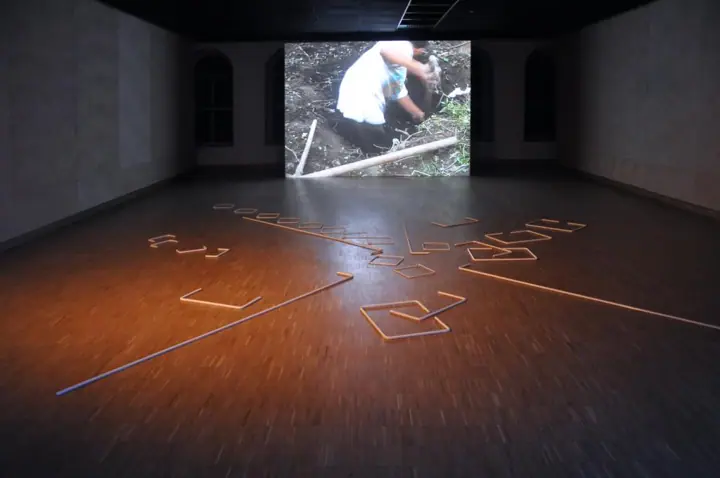
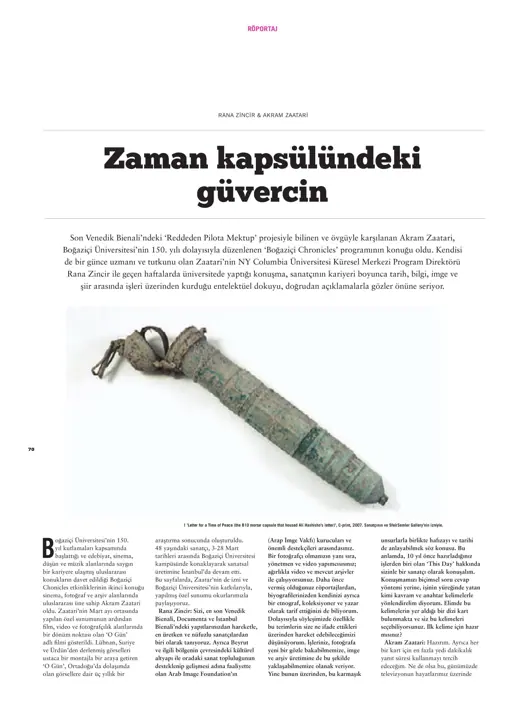
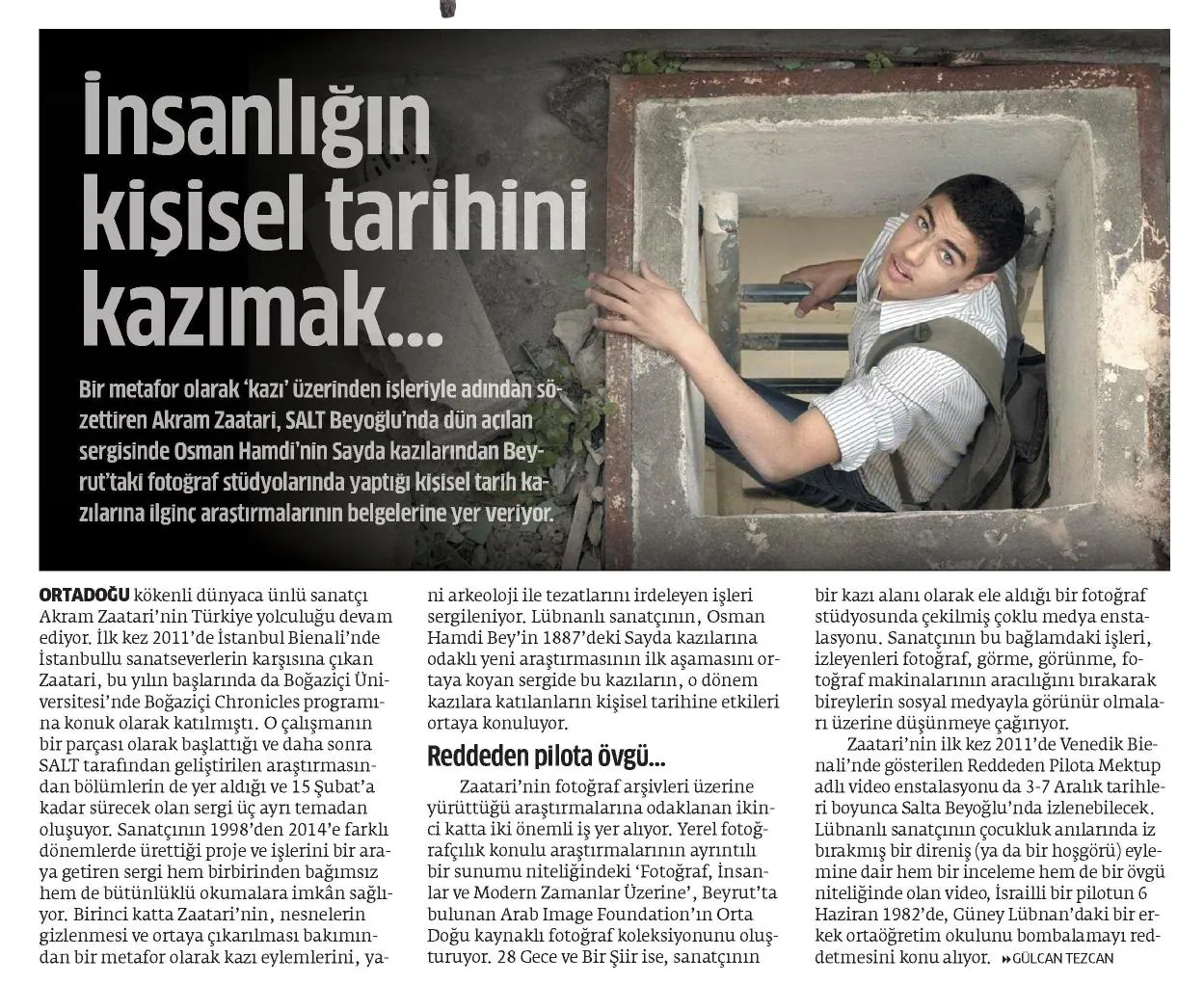
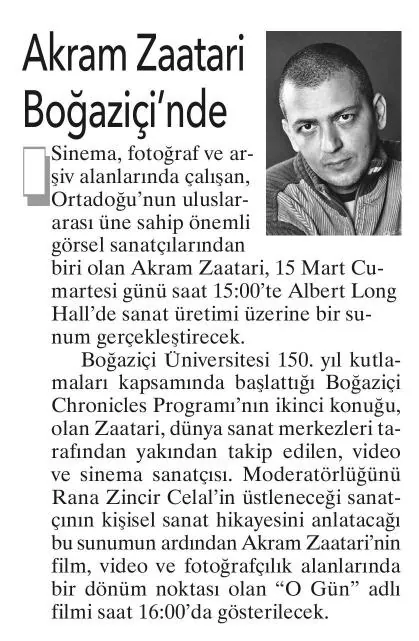
Akram Zaatari has produced more than forty videos, a dozen books, and countless installations of photographic material, all pursuing a range of interconnected themes, subjects, and practices related to excavation, political resistance, the lives of former militants, the legacy of an exhausted left, intimacies among men, the circulation of images in times of war, and the play of tenses inherent to various letters that have been lost, found, buried, discovered, or otherwise delayed in reaching their destinations.Zaatari has played a critical role in developing the formal, intellectual, and institutional infrastructure of Beirut’s contemporary art scene. He was one of a handful of young artists who emerged from the delirious but short-lived era of experimentation in Lebanon’s television industry, which was radically reorganized after the country’s civil war. As a co-founder of the Arab Image Foundation, a groundbreaking, artist-driven organization devoted to the research and study of photography in the region, he has made invaluable and uncompromising contributions to the wider discourse on preservation and archival practice. Zaatari has been focusing since 2004 on studying the archive of studio Shehrazade, which was founded by photographer Hashem el Madani.Zaatari represented Lebanon at the Venice biennale 2013. He has taken part of Documenta 13 (2012), the Istanbul Biennial (2011), and the Venice Biennale (2007), among many other exhibitions. He has shown his films, videos, photographs, and other documents in institutions such as the Centre Pompidou in Paris, Tate Modern in London, Kunstverein and Haus der Kunst in Munich, Le Magasin in Grenoble, MUSAC in Leon, MUAC in Mexico City, Videobrasil in Sao Paulo, and the Museum of Modern Art in New York. Zaatari was born in Saida in 1966. He lives and works in Beirut. His films have screened at the Berlinale, Rotterdam, Toronto, and Oberhausen film festivals. By Kaelen Wilson-Goldie